Résumer cet article avec :
Compliance Tools for Large Enterprises
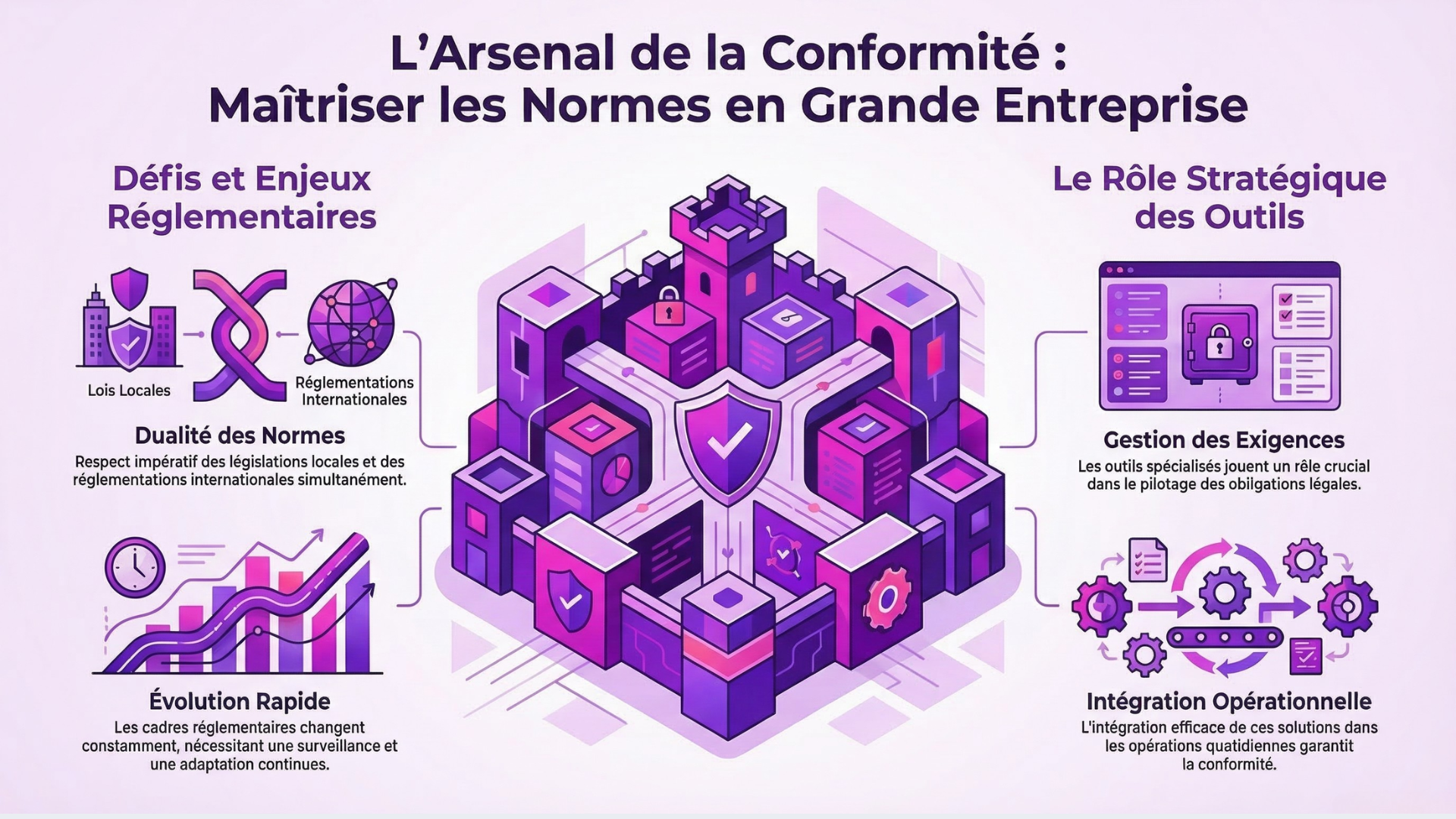
In a world of rapidly evolving regulations, large enterprises must ensure they comply with all compliance standards. This includes not only local laws but also international regulations. Compliance tools for large enterprises play a crucial role in managing these requirements. This article explores the different types of compliance tools available, their importance, and how companies can effectively integrate them into their operations.
What is a Compliance Tool?
A compliance tool is software or a platform that helps businesses manage their legal and regulatory obligations. These tools enable tracking regulatory changes, training employees, and ensuring internal processes adhere to established standards. In the context of large enterprises, where operations are often complex and diversified, these tools become indispensable.
Importance of Compliance Tools
Compliance tools are essential for several reasons:
- Risk Reduction: By using compliance tools, companies can identify and mitigate risks associated with non-compliance.
- Improved Efficiency: These tools automate many processes, saving time and reducing human error.
- Reputation Protection: A company that complies with regulations strengthens its reputation and builds trust with its customers and partners.
- Audit Facilitation: Compliance tools simplify audit preparation and management by providing accurate reports and data.
Types of Compliance Tools
There are several types of compliance tools that large enterprises can utilize. Each addresses specific needs and can be integrated into different aspects of a company's operations.
1. Risk Management Tools
These tools help companies identify, assess, and manage compliance-related risks. They enable the creation of risk matrices, tracking incidents, and implementing mitigation plans. For example, risk management software can alert a company to a regulatory change that could affect its operations.
2. Training and Awareness Tools
Employee training is crucial for ensuring compliance. Online training tools allow for delivering courses on relevant regulations, tracking participation, and assessing employee knowledge. For example, a large enterprise might use an e-learning platform to train its employees on personal data protection.
3. Monitoring and Reporting Tools
These tools enable tracking compliance performance and generating reports. They help companies document their efforts and demonstrate compliance during audits. For example, a reporting tool can provide real-time dashboards on key compliance indicators.
4. Document Management Tools
Large companies must manage a multitude of compliance-related documents, such as internal policies, procedures, and reports. Document management tools allow for secure storage, sharing, and management of these documents. For example, a company can use a document management system to ensure that all policy versions are up-to-date and accessible to all relevant employees.
5. Regulatory Compliance Tools
These tools help companies monitor regulatory changes in their industry. They provide alerts on new laws and amendments to existing regulations. For example, a regulatory compliance tool can inform a company about new data security requirements.
How to Choose a Compliance Tool?
Choosing a compliance tool depends on several factors, including company size, industry sector, and the specific regulations it is subject to. Here are some tips for choosing the right tool:
1. Assess Specific Needs
Before choosing a tool, it is essential to assess the company's specific compliance needs. This includes identifying relevant regulations and internal processes that require particular attention.
2. Consider Integration with Existing Systems
A good compliance tool should be able to integrate easily with the company's existing systems and software. This ensures a smooth transition and avoids data duplication.
3. Check for User-Friendliness
Ease of use is an important criterion. A complex tool can discourage employees from using it correctly. Therefore, it is essential to choose an intuitive solution that requires little training.
4. Evaluate Customer Support
Good customer support is crucial for quickly resolving issues that may arise when using the tool. Ensure that the provider offers responsive and effective support.
5. Consider Costs
Finally, cost is a determining factor. It is important to choose a tool that offers good value for money, considering the features provided in relation to the company's needs.
Examples of Popular Compliance Tools
There are many compliance tools available on the market. Here are some popular examples often used by large companies:
1. Risk Management Software - LogicManager
LogicManager is a risk management tool that helps businesses identify and mitigate compliance risks. It offers incident tracking, reporting, and policy management features.
2. Training Platform - TalentLMS
TalentLMS is an online training platform that enables businesses to deliver compliance courses. It offers progress tracking and employee knowledge assessment features.
3. Reporting Tool - MetricStream
MetricStream is a reporting tool that allows businesses to track their compliance performance. It offers real-time dashboards and customizable reports.
4. Document Management System - M-Files
M-Files is a document management system that enables businesses to store and manage their compliance documents. It offers advanced search and version control features.
5. Regulatory Compliance Tool - ComplyAdvantage
ComplyAdvantage is a regulatory compliance tool that helps businesses monitor regulatory changes. It provides alerts on new requirements and risk analysis.
Practical Tips for Successful Implementation
Implementing a compliance tool can be challenging. Here are some practical tips to ensure a successful integration:
1. Involve All Stakeholders
It is crucial to involve all stakeholders, including legal, compliance, and operational teams, in the tool's selection and implementation process. This ensures that all perspectives are considered.
2. Train Employees
Employee training is essential to ensure the tool is used correctly. Organize training sessions to familiarize employees with the tool's features and its importance for compliance.
3. Establish Clear Processes
Define clear processes for using the tool. This includes how data should be entered, how reports should be generated, and who is responsible for incident management.
4. Monitor Performance
After implementing the tool, it is important to monitor its performance. Use Key Performance Indicators (KPIs) to evaluate the tool's effectiveness and make adjustments if necessary.
5. Stay informed about regulatory changes
Regulations are constantly evolving. Ensure your compliance tool is regularly updated to reflect the latest legal requirements.
Compliance Tools FAQ
Here's an FAQ section that answers common questions about compliance tools for large enterprises:
1. What is a compliance tool?
A compliance tool is software or a platform that helps businesses manage their legal and regulatory obligations.
2. Why do large enterprises need compliance tools?
Large enterprises must comply with numerous regulations, and compliance tools help them manage these requirements efficiently.
3. What types of compliance tools are there?
There are risk management, training, monitoring and reporting, document management, and regulatory compliance tools.
4. How to choose a compliance tool?
Evaluate your company's specific needs, consider integration with existing systems, check user-friendliness, assess customer support, and consider costs.
5. What are some examples of popular compliance tools?
LogicManager, TalentLMS, MetricStream, M-Files, and ComplyAdvantage are some examples of popular compliance tools.
6. How to train employees to use a compliance tool?
Organize training sessions and provide online resources to familiarize employees with the tool.
7. What are the benefits of using a compliance tool?
Benefits include risk reduction, improved efficiency, reputation protection, and audit facilitation.
8. How to track the performance of a compliance tool?
Use Key Performance Indicators (KPIs) to evaluate the tool's effectiveness and make adjustments if necessary.
9. Are compliance tools expensive?
The cost of compliance tools varies depending on their features and the size of the company. It's important to choose a tool that offers good value for money.
10. How can you stay informed about regulatory changes?
Use regulatory compliance tools that provide alerts on new requirements and ensure your tool is regularly updated.
Conclusion
Compliance tools are essential for large enterprises looking to navigate a complex regulatory landscape. By choosing the right tools and effectively integrating them into their operations, companies can not only reduce risks but also improve efficiency and protect their reputation. By staying informed about regulatory developments and training their employees, large enterprises can ensure they remain compliant and competitive in the market.
Turn your quizzes into opportunities, right now
30 days free • No credit card required • No commitment