Blog
What we learn by answering questionnaires that commit a signature.
What is an “audit-defensible” AI answer?
Identified source, timestamp, score, named approver, replayability: what turns an AI statement into evidence you can defend before a third party.
What happens to your data at the end of an AI SaaS contract?
Indexes, vectors, logs, caches: derived data often survives the deletion of the files. The reversibility clauses to demand before signing.

Why does page-number traceability change everything in a security questionnaire?
On the other side of the questionnaire, someone checks. Answers sourced to the document and the page: fewer back-and-forths, more trust, shorter cycles.

Black box: why is aviation the right model?
All major models are opaque at parameter level. The right requirement: transparency of the system. Log, source, version, replay.

Detecting a gap is not enough: how do you close it before submission?
Between the gap detected and the submission date, a window for action decides the bid. Diagnosis, recommendation, closing the gap: the complete method.

Why is your answer library your most perishable asset?
Every validated answer starts to expire the moment it is validated. Owner, version, expiry date: the governance that keeps you from industrialising errors.

Can a general-purpose AI understand nuclear, banking or pharma?
Talking about a sector is not understanding it. Syntax vs business logic: why regulated fields require specialised models, anchored in your evidence.

Does the Cloud Act apply to the enterprise offerings of the major LLMs?
Yes: the 2018 US law applies to providers subject to US law, wherever the data sits. Use vs jurisdiction: the key distinction.

European hosting and sovereign AI: why aren’t they the same thing?
The server's location does not protect you from the operator's law. Jurisdiction, where processing takes place, control of the model, reversibility: the 4 dimensions.

What does the AI Act require of an AI system that answers your tenders?
Transparency, logging, human oversight: what the European regulation changes for document AI, and who carries which obligations.

Token, credit or flat-fee billing: what is the real impact on usage?
The billing model decides adoption: metering rations, a flat fee frees. The three models unpacked, and the questions to ask.
The real cost of an AI-generated answer: the review
If every answer has to be verified, the gain is limited to typing time. The full calculation, and why the confidence score changes the equation.

Why does the usage meter kill AI adoption in companies?
A pay-per-use cost triggers abstention: under-use, a return to old habits, negative ROI. The indicator to track: the usage rate.

How much does an in-house document AI engine really cost over 3 years?
Team, usage, security, evaluation, operations, opportunity: the honest budget of an in-house build, between $1.4M and $2.2M over 3 years according to the analyses.

Why do in-house AI pilots plateau at 70-80% accuracy?
The first 80% are easy, the last few points exponentially expensive. Why the 95% wall decides ROI, and how to get past it.

Build or buy: the core business test
One question settles it: does this tool improve the product your customers buy? If not, buy. The strategic framework and its honest exceptions.

Who is liable when your AI makes a mistake in a signed document?
Towards the customer: you, always. The real question is recourse: an in-house tool with no warranty, or a vendor bound by contract. The legal view.

Should you build your own AI for responding to tenders or buy a solution?
Control, hidden costs, obsolescence, core business: the complete build vs buy decision framework for document AI, with figures.

Why does 90% of the cost of an internal AI project come after the POC?
A POC is designed to succeed, production is designed not to fail. Rights, reliability, robustness, operations: the anatomy of the invisible 90%.

Why won’t your October agent behave like your January one?
Continuously updated models, non-determinism, no regression testing: the silent drift of in-house AI agents, and how to keep it under control.
Why is a tender you receive a dangerous document for your AI?
An external document can manipulate the AI agent that reads it: hidden instructions, exfiltration, bias. The attack surface of incoming tenders, and the defences.
Does an AI agent connected to your internal documents respect your access rights?
If the semantic index does not reproduce your permissions, the agent becomes a back door. Inherited rights, derived content, logs: the CISO's view.

Can an in-house AI agent handle a tender from end to end?
In a demo, an in-house AI agent reads, extracts and drafts. In production, you have to guarantee, measure, govern and maintain. The difference explained.

How do you know what your AI agent did not see?
Generation is visible; failed extraction is not. The requirement missed on page 87 is discovered at bid opening. Extraction coverage is the only answer.

How do you measure an AI agent’s accuracy? The basics of evaluation
Annotated test bench, coverage, accuracy, regression testing: no measurement, no production. Why the 95% threshold decides the ROI.

Our office suite already has built-in AI: why would we need anything else?
Search, summarise, draft: yes. Extract a requirements matrix, score compliance, trace approvals: no. What the built-in assistant does not do.

Why must an AI know how to say “I don’t know”?
In a binding document, an identified gap is worth more than a plausible but wrong answer. Abstention, a prerequisite for ROI, and the next step.

What happens to your data when your teams paste it into a public LLM?
Specifications, prices, strategy: shadow AI takes your data outside your legal perimeter. Use, jurisdiction, countermeasures: the full picture.

Why not simply answer our tenders with an LLM?
An LLM writes fast, but a tender is legally binding. What generative AI lacks to produce accurate, sourced and approved answers.

What is the difference between a general-purpose LLM and a tender response platform?
A difference in kind, not degree: one drafts, the other proves. Requirement extraction, sources, validation, repository: the complete comparison.

What is an AI hallucination, and what is at stake in a document that binds the company?
A hallucination is a false statement produced with confidence. In a binding bid: disqualification, penalties, liability. The countermeasures.
When is a general-purpose LLM more than enough?
Drafts, summaries, rewording: the LLM excels. The boundary is not the size of the document, it is the signature. The honest guide to use cases.

EcoVadis: from 3 months to 5 days, preparing (and improving) your score without exhausting your ESG team
The EcoVadis renewal devours weeks of work every year. Here is how to turn it into a quick, sourced, improvement-driven exercise instead of a copy-and-paste marathon.
Building a reusable knowledge base for your tenders: the practical guide
Stop rewriting the same answers every quarter. Here is the method, step by step, for turning your past answers into an asset that works for you.

Good ESG teams report. The best transform.
The difference between a sustainability team that endures reporting and one that drives change does not come down to talent. It comes down to a choice of method.
Answer once, reuse everywhere: ending the proliferation of ESG frameworks
CSRD, EcoVadis, CDP, B Corp, DJSI, customer questionnaires… You answer the same questions five times, in five different formats. What if you only answered once?

Multi-agent orchestration explained to a business leader (without a line of jargon)
You don’t need to understand how the engine works. But you do need to understand why this architectural choice determines how reliable and how valuable AI is in your company.
EU AI Act: what actually changes for AI tools in business in 2026
Forget the 450-page text. Here, without jargon, is what the world’s first major AI law actually requires of your company, and by when.

200 due diligence questions in 1 hour 30: transforming production capacity without compromising legal quality
Optivalue.ai produces a draft of 200 due diligence questions in 1 hour 30, sourced document by document, in a private instance dedicated to your firm. Your partners approve. The responsibility remains theirs.

Legal capital: every negotiation creates knowledge — how to stop letting it die in emails
In 2019, your head of legal negotiated a framework agreement with your main distributor. The negotiation lasted six weeks. She gave way on four points, held firm on three, and accepted a compromise on the liability clause in exchange for a volume guarantee. The outcome was good: not perfect, but solid.

Supplier assessment: going from 30% to 100% coverage of your supplier panel without hiring
Your panel has 210 active suppliers. Your Procurement team has four people. Each supplier assessment takes between 2 and 4 hours: questionnaire sent, reminders, answers analysed, report produced.

1,247 data room documents analysed in 45 minutes: what augmented due diligence really changes
The team has been in place since Monday. Six people: two partners, two associates, two analysts. The data room has just opened. It contains 1,247 documents: contracts, balance sheets, audit reports, litigation.

Preparing your data room before the buyer arrives: the guide for business owners who want to defend their price
Most business owners approach the data room as an administrative formality: gather the documents requested, file them in folders, make them available to the buyer.
How to convince the CISO, the head of legal and the board at the same time with a single AI use case
The CISO has questions about data sovereignty. The head of legal wants to review the terms and conditions before authorising anything. The board is waiting for a costed business case. And meanwhile, your teams are still spending two days per questionnaire, by hand, as they did in 2019.

Multi-framework 2026: NIS 2, ISO 27001, CSRD, Sapin 2 — the overlap map your team has no time to draw
Centralise your compliance documentation and answer your NIS 2, ISO 27001, CSRD and Sapin 2 audits from a single document base.

The memory of winning tenders: how to capitalise on your best answers to win the next ones faster
You won this tender in 2024. The answer was excellent: well argued, consistent, differentiated on three criteria the competitor had missed. Your bid manager had spent ten days on it. He was proud of it.

Zero challenges in 6 months: how full public procurement traceability shifts the balance of power
Optivalue.ai centralises your public procurement documentation and produces answers to requests for justification in minutes, sourced document by document. Dedicated private instance, hosted in France.

SIRE 2.0 in 2026: what the new Human Factor pillar actually changes for your vetting preparations
Optivalue.ai lets DPA teams prepare SIRE vetting questionnaires by drawing directly on fleet documentation, SMS, certifications, inspection reports and company circulars. Dedicated private instance, hosted in France, answers sourced section by section.

The clause you missed on page 34: how to turn contract review into a system
Your head of legal missed it. Not through negligence. He had reviewed this contract on a Friday afternoon, between two emergencies, with nine other files waiting. He had done what any experienced lawyer does in those conditions: he had read quickly, looked for the usual clauses in the usual places, and signed.

NIS 2 in 2026: the document preparation guide for CISOs (what the auditor will look for)
It is a fundamental distinction that many CISOs still underestimate. An organisation with solid security maturity but scattered, incomplete or outdated documentation risks coming out of an audit with as many findings as a structurally less advanced organisation that is better documented.

The board expects an answer by tomorrow morning: how the best CEOs handle document emergencies
If your board or an investor asked you 18 precise questions about your organisation tomorrow morning — certifications, subcontracting policy, regulatory exposure, contractual structure — how long would it take you to answer completely and verifiably?

How to measure the ROI of a domain-specific document AI honestly: the no-bullshit guide
AI ROI promises are everywhere. 300%. 500%. Sometimes 1,000%. Figures that look more like sales arguments than rigorous measurements.

Sovereign AI: a practical guide for decision-makers (CEO, CIO, head of legal) — what to demand, what to avoid
In 2026, “sovereign AI” is on everyone’s lips. Vendors use it. Consultancies sell it.

You can build a RAG POC in three weeks. But should you industrialise your own AI solution, or buy one?
Any team can plug an LLM into its documents in three weeks. Building an enterprise AI that is reliable, auditable and defensible is another matter. Here is where the real effort goes: the engine counts for 15%, the remaining 85% decide whether the answer is defensible.
Due diligence, audits, tenders: the relentless questionnaire cycle wearing out your teams in 2026
Monday morning. In your legal department's open-plan office, a senior lawyer opens his inbox. He has received a 180-question due diligence questionnaire. Deadline: Friday. On the floor above, your CISO receives a customer security audit at the same time: 247 questions, same deadline.

Intangible capital: your in-house expertise is your most undervalued asset, and your most fragile
Your intangible capital is your most lasting competitive advantage, provided you do not let it leave with your employees.

Evidence graph: definition and benefits
In a world where data is everywhere, the way we organise and use it is becoming crucial.

DSLM vs general-purpose LLM in compliance
In the ever-changing world of artificial intelligence, two concepts are emerging as fundamental pillars: DSLMs (Domain-Specific Language Models) and LLMs (Large Language Models).

Automating regulatory questionnaires
In a world where regulatory compliance is increasingly complex, automating regulatory questionnaires is becoming a necessity for companies.

Compliance tools for large enterprises
In a world where regulations change quickly, large enterprises must make sure they comply with all compliance standards.
Automating compliance audits in the enterprise
In a world where regulation is becoming ever more complex, companies must make sure they comply with all standards and compliance requirements.

What is a compliance questionnaire?
In a world where regulations and compliance standards are becoming ever stricter, the compliance questionnaire has become an essential tool for companies.

The jagged frontier: when AI excels at maths and fails to read a clock
The best AI models win gold at the Maths Olympiad, yet misread an analogue clock one time in two. The Stanford AI Index 2026 documents this paradox and its consequences for companies deploying AI on sensitive tasks.

The 5 risks every due diligence misses, and how to spot and handle them systematically
A well-run due diligence does not guarantee zero risk. It guarantees that the risks identified have been assessed, priced in or dealt with contractually before closing.

CISOs: how to take back control of your strategic agenda when questionnaires eat up your time
Jérôme Emin has the profile every IT services company dreams of hiring. An experienced CISO, with a solid command of the frameworks and a clear view of the security stakes. When he joins Sully Group, an IT services company with 900 employees, the mission is ambitious: structure the security policy, prepare for ISO 27001 certification, deploy an in-house SOC, make progress on NIS2.

Why AI POCs fail: the 4 structural reasons, and the 5th nobody mentions
Your company has launched an AI POC. Perhaps even several.

M&A due diligence: how AI speeds up DDQs without sacrificing rigour
In a merger or acquisition, every answer is binding. Here is how AI saves weeks on due diligence questionnaires, without ever compromising on accuracy.

The CSRD wave has changed shape: automating ESG reporting without losing your soul (or your compliance)
The mandatory scope has shrunk by almost 90%. But demand for ESG data has not gone away: it has moved. Here is what really changed in 2026, and how to prepare for it intelligently.

How to measure the ROI of a pre-sales team (and prove that AI changes the game)
Pre-sales is one of the most strategic (and least well-measured) functions in a sales organisation. Here are the indicators that really matter, and how to demonstrate, with figures to back it up, the impact of an AI tool.

Supplier risk assessment: the new obsession of buyers and CISOs
Your customers no longer ask you only for your price and lead times. They want to know whether you are a risk. And that question now determines whether you win contracts.

7 signs your questionnaires cost you far more than you think
Tenders, audits, security questionnaires: the real bill does not appear in any budget. Here is how to spot the hidden cost, before it costs you a contract.
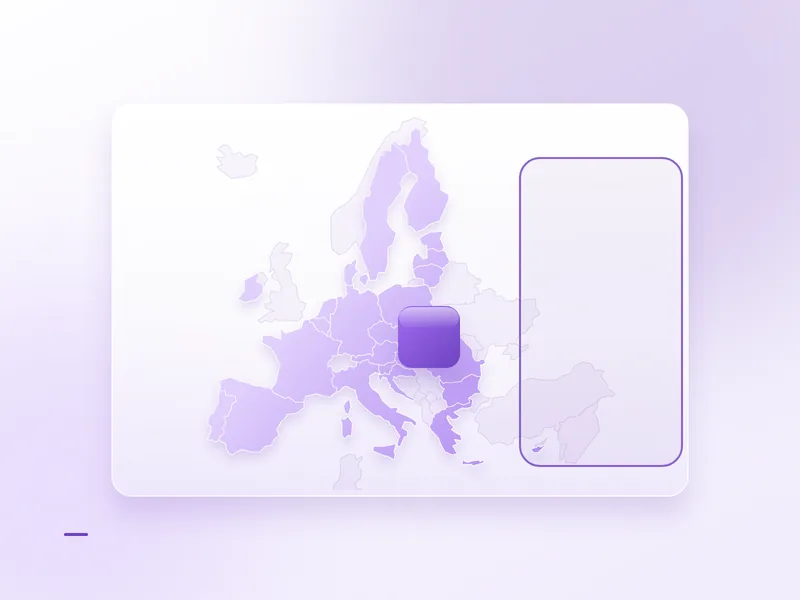
Sovereign AI vs shared AI: why your compliance data cannot leave your perimeter
Plugging your compliance documents into a consumer AI means handing your organisation’s DNA to an infrastructure you do not control. An honest comparison between two models that are opposites in every way.

NIS2, DORA, AI Act: when regulation makes sovereignty of your AI tools mandatory
Digital sovereignty is no longer a philosophical preference. Three major European texts are, in practice, turning it into a compliance constraint. An overview.
AI hallucination in compliance: the reputational risk nobody really puts a figure on
AI hallucinations are talked about as a technical defect. In compliance, they are something else: a reputational and legal time bomb whose cost appears in no budget.

Expert augmentation: how Optivalue.ai frees your experts from compiling so they can start thinking again
Your CISOs, lawyers and architects were hired for their judgement. They spend their days looking for files. Here is how Optivalue.ai redistributes the roles: the machine compiles, the expert decides.

Tenders: why unsourced answers lose you contracts, and how Optivalue.ai fixes it
When product and price are comparable, trust decides. And in a tender, trust cannot simply be asserted: it has to be proven. Here is how Optivalue.ai turns every answer into evidence.

Bid management in 2026: how Optivalue.ai cuts your RFP response time by 90%
Two days for 200 questions used to be the norm. With Optivalue.ai, the sourced draft is ready in an hour and a half. Here is exactly what changes, and why speed does not sacrifice rigour.

950 new regulations a year: why compliance AI is no longer optional
Compliance is not growing, it is exploding. At this pace, handling it by hand is no longer a question of organisation but of survival. An analysis of a tipping point.

Air-gap, hosting in France, HDS: deploying compliance AI in the most sensitive environments
For most organisations, the sovereign cloud is enough. For some (defence, healthcare, critical operators), the data simply cannot leave. Here is how AI gets deployed there all the same.

Confidence score: how to read the reliability of an AI-generated answer
Not all AI answers are equal. The real problem is that you usually do not know which ones to check. Our confidence score answers exactly that question.

Duty of vigilance: prove the assessment of your value chain, don’t just assert it
The mandatory scope of the duty of vigilance has narrowed to the very largest groups. But the demand for evidence still cascades all the way down the chain. Whether you are subject to it or a supplier, you will have to show, not just tell.
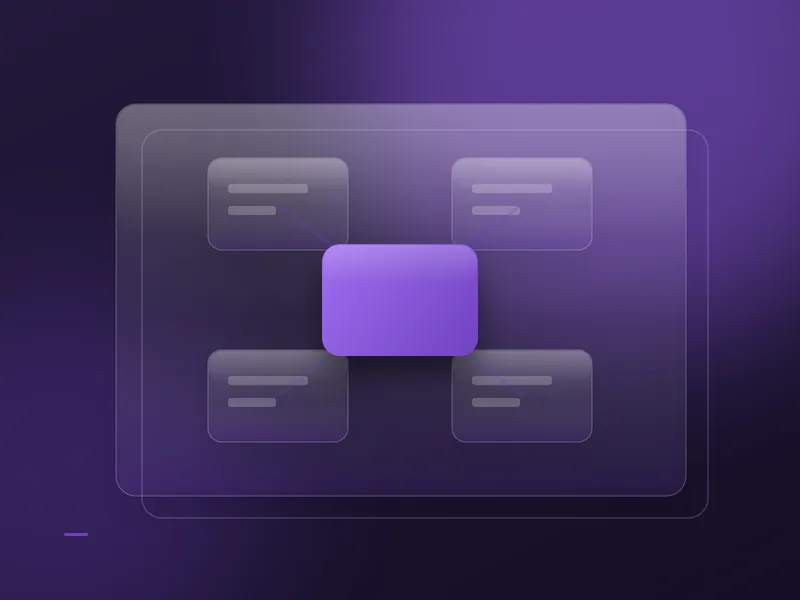
Agent Builder: create your own function-specific AI agent, with no IT project or data team
Most enterprise AI projects fail at the same point: adoption. Ours is rolled out differently: through value, function by function, without waiting for the IT department.
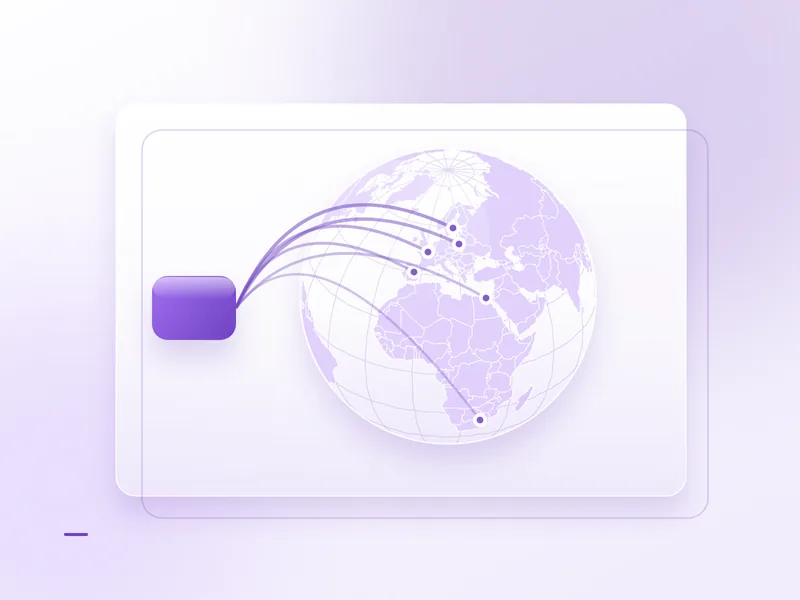
International groups: answering in 109 languages with guaranteed global consistency
When each subsidiary answers in its own language, in its own way, you do not have one compliance policy, you have twenty. Here is how to unify without centralising everything.

ISO 9001 and quality management: AI that speaks your auditors’ language
Preparing a quality audit means gathering scattered evidence and answering in the exact vocabulary of the standard. It is work where general-purpose AI flounders, and where a specialised AI makes the difference.
Overstretched DPO: automating DPIAs, the record of processing and processor assessments (Article 28)
A DPO’s day-to-day work is rarely strategy. It is documentation, reminders, impact assessments, endless processor questionnaires. Here is how to lighten the load without loosening the rigour.